coSlash

Your coding agents. One live view.

Run more agents Lose less context

View on GitHub
  • Read-only
  • No account
  • Local by default
  • Open source · MIT

Early preview · Apple Silicon and Intel

Know what needs you Active, waiting, idle, or inactive — across every repo and branch.
Keep the thread Goals, decisions, files, commits, and every command the agent ran.
Keep going Resume with context intact, or hand a brief to a fresh agent.
CC Claude CodeLive now
CX Codex / ChatGPTLive now
OC OpenCodeLive now
+ More agentsComing soon
01 — Sessions

Keep moving without losing context.

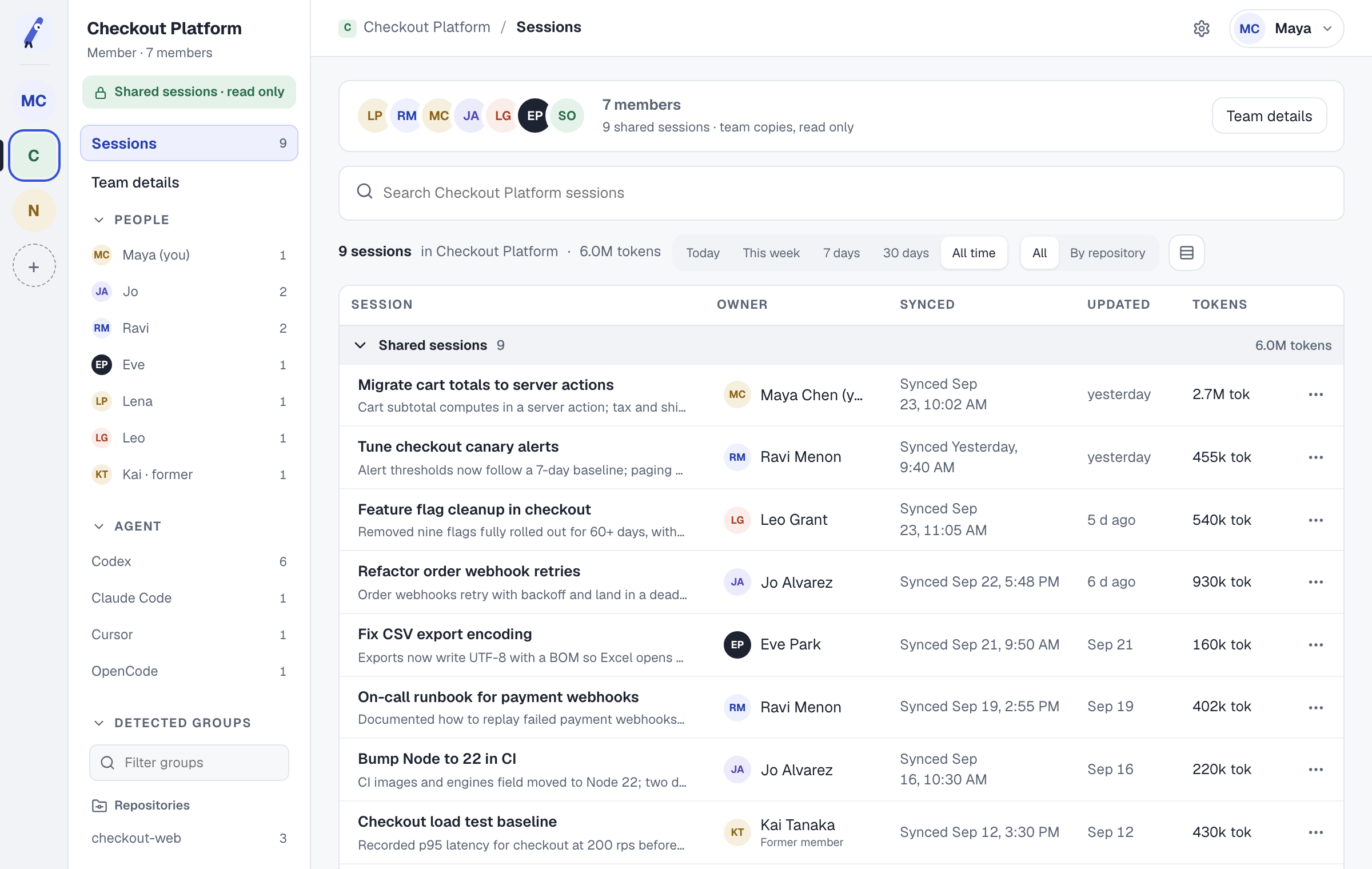
One place to see what every coding agent is doing.

Waiting on youquestions, permissions, failures Actively workingwith subagent lineage Worth a lookwindow filling, cache going cold
127.0.0.1:8787
coSlash
Search titles, repos, branches

Sessions

2 waiting 3 active 9 sessions this week · 5 Claude Code / 3 Codex / 1 OpenCode · $57.80 est. at list API prices

AllClaude CodeCodexOpenCode
WeekMonthAll
ListBoard
Claude Code Fix double-charge on retried checkout a3f19c2b Waiting 40m Interactive

Asked whether the idempotency key belongs on the payment intent or the order.

acme-payments · fix/double-charge · 40m ago · 1h 12m · 9 files · ctx 38%

$7.43 est.8.23M tok
Codex Migrate settings page to the new token system 7c04ee81 Active Autonomous

Rewriting tokens.css and threading ThemeProvider through the settings tree.

acme-dashboard · feat/design-tokens · just now · 46m · 23 files · ctx 54%

$9.32 est.9.92M tok
SUB audit-color-contrast gpt-5.6-sol returned
$0.58372k tok
SUB find-hardcoded-hex gpt-5.6-sol running
$0.24144k tok
Claude Code Refactor webhook retry into a queue worker 5b8d0417 Idle Interactive

Worker drains in staging. The dead-letter path and its tests are still open.

acme-payments · refactor/webhook-retry · 3h ago · 26h 40m · 9 files

ctx 91% · compacted 2× · 14 behind main · cache cold

$23.23 est.25.92M tok
02 — How it works

Your work stays on your machine.

01

Reads your disk

The transcripts your agents already write. Read-only, always — coSlash never modifies them.

02

Builds the record

Goals, decisions, files, commands, and subagent lineage, indexed locally. No account, no daemon, no telemetry.

03

Puts you back in

Resume in your own CLI with full context, or carry a handoff brief into a fresh session — even one from a different vendor.

03 — Resume or hand off

Know whether to resume, before you resume.

Picking a session back up is not always the cheap option. coSlash lays out what it will actually cost to continue, then gives you two ways back in.

Context usedHow full the window is, coloured as it climbs. Past the ceiling the session compacts again, and every compaction trades detail for room.
Prompt cacheWarm or cold, with the 5-minute and 1-hour windows marked. Resuming into a cold cache re-reads the session at full input price — about ten times what a cache hit costs.
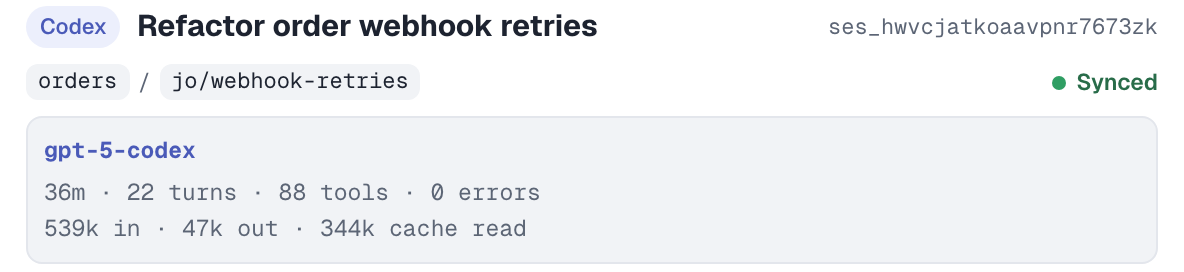
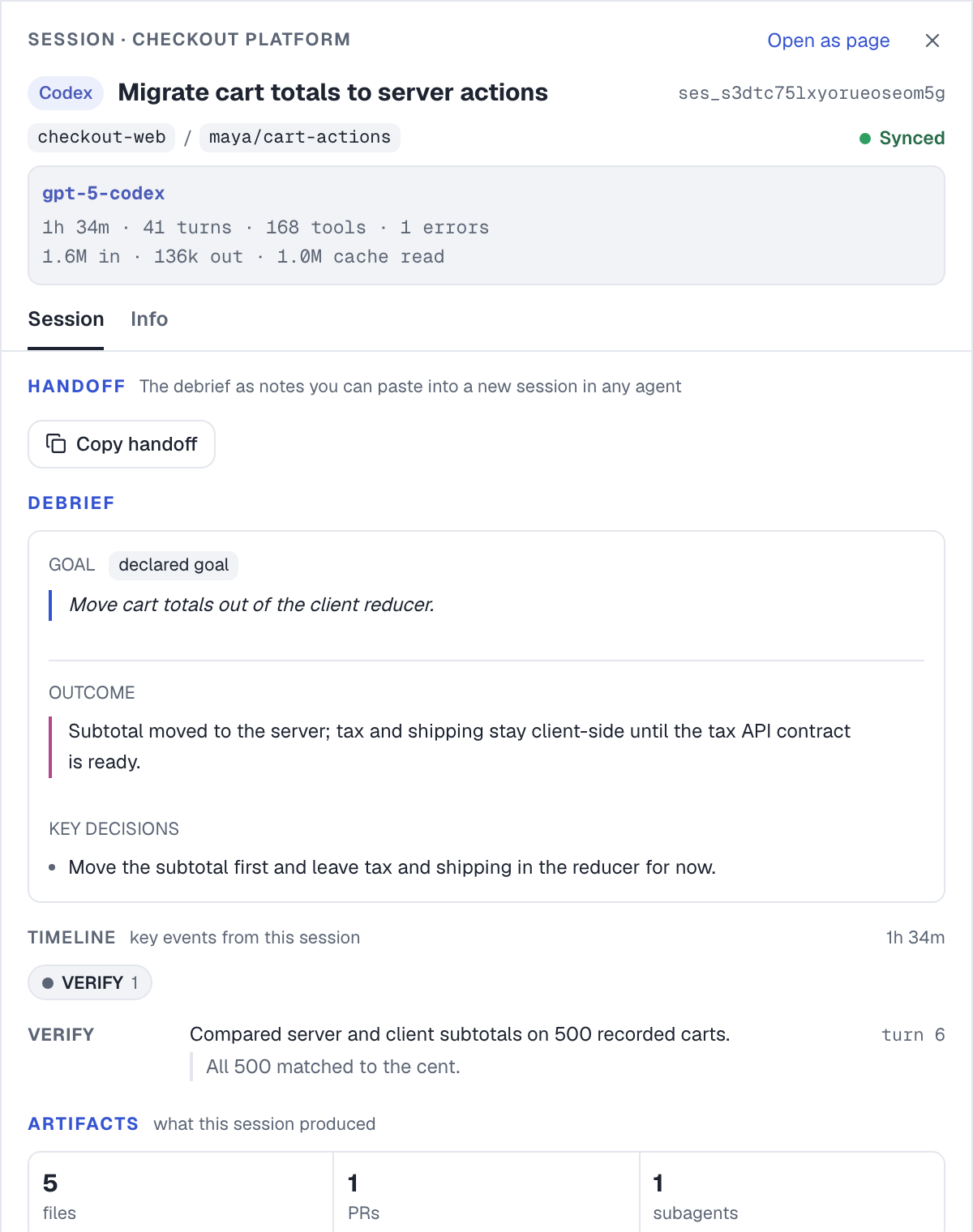
DebriefThe goal, the outcome, and up to five key decisions, reconstructed from the transcript. A badge tells you where the goal came from — declared by you, inferred from the session, or the raw first prompt as a floor.
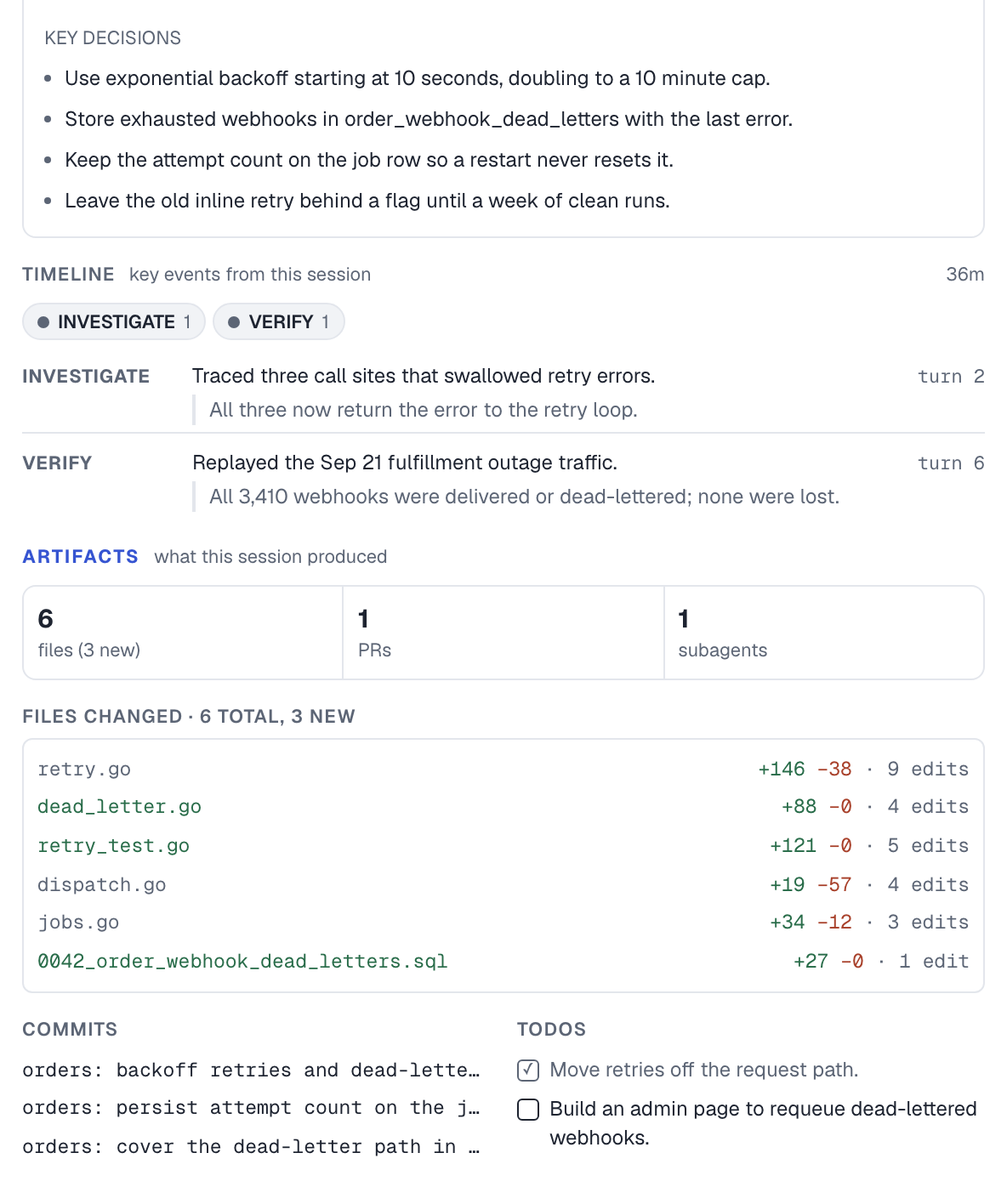
TimelineFirst prompt, questions the agent asked, your answers, recaps, and compactions — each stamped with its turn. Click a category to show or hide it.
ArtifactsFiles changed with per-file counts, commits, PRs, open todos, and every shell command the session ran.

91% context, compacted 2×, 14 behind mainthis one says start fresh

04 — Pricing

Free locally. Pay for collaboration.

The personal attention layer stays free and open source.

Team In development

Coming soon

For shared agent work

  • Shareable live visibility
  • Shareable session discovery
  • Cross-person handoffs with context
  • Workspace access controls
  • SOC 2 Type II
Not yet available
Enterprise

Custom

For organizations with advanced needs

  • Everything in Team
  • Enterprise deployment options
  • Security and compliance support
  • Priority onboarding and support
Contact us
05 — FAQ

The important questions, answered.

What does coSlash read?

The session transcripts Claude Code, Codex, and OpenCode already write to disk, plus the Git and process metadata needed to tell a running session from a finished one. There is nothing to connect and no account to create — it reads what is already on your machine.

Which agents does it support, and on what?

Claude Code, Codex, and OpenCode — both the desktop apps and the CLIs, with subagents shown under the session that spawned them. macOS on Apple Silicon or Intel. Linux and Windows are not supported yet.

Does coSlash change my code or my transcripts?

No. Transcripts are opened read-only and never written to, and coSlash makes no commits, branches, or edits in your repository. It writes only to its own directory, ~/.coslash, where cached debriefs and pending handoffs live. Resume and handoff launch your own CLI in your own terminal — every edit after that is the agent’s, exactly as if you had started it yourself.

Does anything leave my machine?

Not unless you turn it on. Debriefs are derived from the transcript with no model involved. Optional AI synthesis only sharpens them, and stays off until you enable and save it. When on, it sends a bounded set of derived facts — about 12 KB — through the local Claude Code or Codex CLI you pick. That spends a little of the agent’s own usage: a few cents per session at most, and only substantial sessions qualify.

It runs a local server — is that exposed?

No. coSlash binds to 127.0.0.1:8787 and nothing else, and every API request carries an access token minted when the server starts. It is not reachable from your network, and a link from an earlier run stops working once the server restarts.

How are costs calculated?

They are estimates at list API prices, not invoices: token counts from the transcript against a dated per-model price table. A model with no verified price is flagged and left out of the total rather than guessed at, so the number is never quietly wrong. OpenCode sessions report the cost they recorded themselves instead of an estimate.

Can I pick a session up in a different agent?

Yes. Resume reopens the original session in its own CLI with full context. Start fresh writes a Markdown handoff — objective, current state, key decisions, timeline, files, commits, next steps — and opens a new session with it loaded as reference, so the next agent waits for your instruction instead of acting on stale notes. The handoff is plain text, so it crosses vendors: a Claude Code session can be picked up in Codex.

The session ends. The knowledge stays.

Install once, and every session your agents run stays legible — today and three weeks from now.

Install coSlash

Choose your install method.

Run either command in your terminal.

Quick install

Downloads and runs the installer.

curl -fsSL https://coslash.io/install.sh | bash

Homebrew

Install from the coSlash tap.

brew install centauri-ai/tap/coslash